
Warehouse CCTV in Kuwait: Coverage and 24/7 Recording
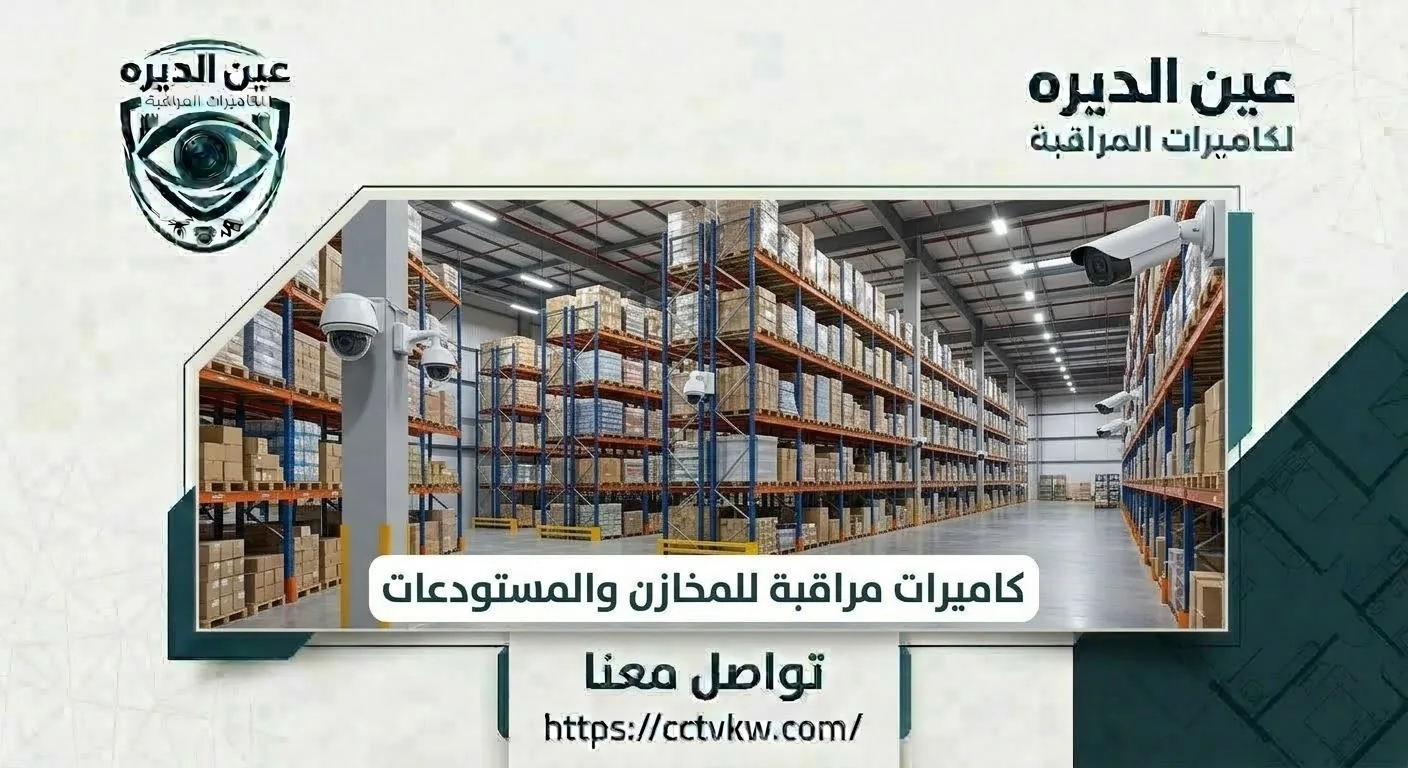
Large warehouses have long aisles, tall racks and loading doors that make surveillance more complex than in a typical shop. Warehouse CCTV in Kuwait needs a plan for night coverage, movement zones and network routes, followed by a recorder and storage sized for the desired retention period. Many cameras will not help if forklifts or shelving block the receiving area. Deera Eye can be contacted to discuss continuous warehouse surveillance, channel capacity, lighting and storage with actual recording tests.
The goal is a clear answer before money is spent: what equipment is genuinely needed, where should it go, and how can successful installation or repair be demonstrated? Each step addresses the search intent in the title while protecting recordings and user privacy.
For relevant service details: CCTV for warehouses
Installing CCTV for a large merchandise warehouse
Start with a site walk mapping valuable inventory, staff entrances, forklift routes and receiving bays. High ceilings may make useful detail difficult to capture; test resolution and lens angles from the intended mounting locations rather than a generic plan.
At the warehouse door, avoid camera positions routinely blocked whenever a forklift moves between storage and receiving.
Warehouse coverage must reflect goods movements, forklifts and rack aisles rather than square meters alone.
For the requirement “Installing CCTV for a large merchandise warehouse”, For example, if the drawing differs from the real field of view, adjust one angle and review its effect on the entrance or movement route before final mounting. Small changes before installation or repair are better than redoing work later.
For “Installing CCTV for a large merchandise warehouse”, ask that the assessment be based on actual views, measurements or on-site tests as appropriate. Camera count or model names alone should not decide the outcome; usable coverage or a properly restored function is the acceptance criterion, with responsibilities explained to the customer.
Cameras at warehouse loading and unloading entrances

Loading doors experience repeated vehicle and goods movement and abrupt lighting changes when opened. Use angles that record goods entering and leaving without relying on a single wide shot with insufficient detail.
Truck movement and outdoor light can turn the inside receiving scene dark; test the view with the door both open and closed.
Low light and outdoor loading doors require actual lens and exposure tests.
For the requirement “Cameras at warehouse loading and unloading entrances”, Completing the job is not simply clearing an error or displaying video briefly. The requested function should remain usable when needed, so it must be tested again after the agreed intervention.
For “Cameras at warehouse loading and unloading entrances”, ask that the assessment be based on actual views, measurements or on-site tests as appropriate. Camera count or model names alone should not decide the outcome; usable coverage or a properly restored function is the acceptance criterion, with responsibilities explained to the customer.
Covering storage aisles and tall warehouse racks
Tall racks create blind spots, especially when stock positions change. Aisles need suitable lengthwise views and sometimes crossing views at junctions, while equipment should be protected from forklift impact routes.
Check that tall racks do not obstruct aisle ends and review footage whenever merchandise layouts change.
Continuous recording depends on storage, power and network reliability; working cameras do not automatically prove footage was saved.
For the requirement “Covering storage aisles and tall warehouse racks”, Before approving parts or cable work, establish whether existing components can be reused. A worthwhile replacement fixes the identified problem rather than changing the entire system without diagnosis.
For “Covering storage aisles and tall warehouse racks”, ask that the assessment be based on actual views, measurements or on-site tests as appropriate. Camera count or model names alone should not decide the outcome; usable coverage or a properly restored function is the acceptance criterion, with responsibilities explained to the customer.
Continuous CCTV recording throughout warehouse shifts
For recording all day, review reliable power, recorder and drive health, and overwrite settings. Cameras operating around the clock do not mean footage is retained forever; retention is limited by capacity and configuration.
Operating cameras around the clock is not the same as retaining footage for a week or month; retention depends on capacity, bitrate and recording configuration.
For the requirement “Continuous CCTV recording throughout warehouse shifts”, Everyday conditions can differ with lighting, user activity and changes in the site. Test a typical operating situation rather than an empty, perfectly illuminated moment only.
For “Continuous CCTV recording throughout warehouse shifts”, ask that the assessment be based on actual views, measurements or on-site tests as appropriate. Camera count or model names alone should not decide the outcome; usable coverage or a properly restored function is the acceptance criterion, with responsibilities explained to the customer.
Choosing cameras for low-light storage facilities
Low light requires checking real conditions during night shifts. Strong backlighting from an outdoor door can obscure objects inside; test appropriate imaging features rather than relying on a published resolution number.
Test low-light areas during night shifts, not only at midday, because shadowing may remove critical detail.
For the requirement “Choosing cameras for low-light storage facilities”, To avoid unnecessary expense, request an explanation of the fault, components and testing plan. If the scope changes after inspection, its cost and effect should be explained before approval.
For “Choosing cameras for low-light storage facilities”, ask that the assessment be based on actual views, measurements or on-site tests as appropriate. Camera count or model names alone should not decide the outcome; usable coverage or a properly restored function is the acceptance criterion, with responsibilities explained to the customer.
For relevant service details: CCTV installation
Designing CCTV networks for multi-section warehouses
Multi-section warehouses may require distributed switches and organized cable pathways protected from moving equipment. Distance, dust and heat influence connection media and the locations of network cabinets.
Cables near forklift routes need physical protection so mechanical damage does not repeatedly interrupt the system.
For the requirement “Designing CCTV networks for multi-section warehouses”, At handover, check the latest saved recording and viewing rights with the responsible person. Formatting or deletion requires informed authorization where important data may be present.
For “Designing CCTV networks for multi-section warehouses”, ask that the assessment be based on actual views, measurements or on-site tests as appropriate. Camera count or model names alone should not decide the outcome; usable coverage or a properly restored function is the acceptance criterion, with responsibilities explained to the customer.
Calculating hard drive capacity for warehouse CCTV
Calculate storage from camera count, bitrate, recording hours and required retention, then allow a practical margin. For illustration, doubling the number of cameras at similar settings approximately doubles storage consumption.
Drive calculations begin with bitrate per channel over recording hours, while allowing for compression and variable activity.
For the requirement “Calculating hard drive capacity for warehouse CCTV”, You can shorten diagnostic delays by recording the start time of a problem or sharing a site and camera map while concealing passwords and sensitive codes. Accurate details reduce guesswork.
For “Calculating hard drive capacity for warehouse CCTV”, ask that the assessment be based on actual views, measurements or on-site tests as appropriate. Camera count or model names alone should not decide the outcome; usable coverage or a properly restored function is the acceptance criterion, with responsibilities explained to the customer.
How to compare options for Warehouse CCTV in Kuwait: Coverage and 24/7 Recording
For Warehouse CCTV in Kuwait: Coverage and 24/7 Recording, a useful offer states equipment types and quantities, installation or repair work, cabling, storage and configuration. For an existing system, it should say whether the present recorder and cables will be reused or replaced, and why. Clear detail prevents comparisons between a complete quotation and another that excludes essential items.
For Warehouse CCTV in Kuwait: Coverage and 24/7 Recording, do not base a decision on “best” or “cheapest” alone. Ask what the system must achieve at the real location and whether cameras, lighting and storage meet that objective. If the requirement is entrance detail or a particular retention period, the design must reflect it.
-
Location: Identify the physical point and required view before selecting an angle or carrying out repairs.
-
Compatibility: Check the camera, recorder, power and connection specifications before making a replacement.
-
Recording: Save and retrieve a sample clip whenever recording is part of the requirement.
-
Viewing: Confirm usable footage and access for authorized users, not merely a device name in an app.
-
Protection: Protect connectors, accounts and data; avoid changes that delete evidence or expose unauthorized access.
-
Handover: Document installed or adjusted components and request a concise explanation of their operation.
For Warehouse CCTV in Kuwait: Coverage and 24/7 Recording, the offer should also explain applicable product or workmanship warranty terms and how acceptance testing will occur. Retain a record of approved components and keep the viewing administrator account under the system owner’s control.
Installation or repair steps for Warehouse CCTV in Kuwait: Coverage and 24/7 Recording
Define the requirement
Describe the property, installation points and purpose of each camera, or the precise fault, including whether the work is new installation or maintenance.
Survey and diagnosis
Review positions, entrances, distances and power, or diagnose the cause when the request concerns an existing failure.
Choose suitable equipment
Check the cameras, recorder, drive and network specifications and identify working components that may be retained.
Agree on scope
Confirm device quantities, cabling, work, applicable warranty terms and the approved price before additional changes are requested.
Complete the work
Install equipment or repair connections to the plan while avoiding unnecessary interruption to unaffected channels and protecting existing data.
Test and hand over
Test footage in realistic conditions, save and retrieve a clip, and verify external smartphone viewing if it is part of the agreement.
Continuous recording depends on storage, power and network reliability; working cameras do not automatically prove footage was saved.
Costs and warranty terms for Warehouse CCTV in Kuwait: Coverage and 24/7 Recording
Warehouse costs depend on mounting heights, network distances, cable protection, sections and drive sizing. Ask for a quotation that specifies retention and acceptance tests.
These topics have clear purchase intent, so request a written Deera Eye quotation based on models, quantities and cable routes rather than competitor advertisements or unapproved prices. Useful quotation details include property type, camera positions, distance, storage and whether phone viewing is required.
-
Cost components: cameras or parts, recorder where needed, drive, connections and inspection or installation work.
-
Warranty: identify the products or work covered, duration and exclusions under the company’s approved offer.
-
Handover: test live video, recording and retrieval of an actual clip as applicable to the agreed service.
-
Data: protect existing recorder footage and do not format storage without the owner’s explicit approval.
If specifications change during the survey, request an updated quotation before work begins. This lets you compare options and see exactly what you are paying for, whether installing a new system or correcting a defined fault.
Frequently asked questions
How many cameras does a large warehouse need?
The number depends on racks, aisles, loading bays and entrances, not square meters alone.
How can tall shelving be covered?
Use suitable views along aisles and at junctions after testing blind spots.
Can warehouse cameras record 24 hours a day?
Continuous recording is possible on appropriately configured systems with reliable power and storage, but retention is finite.
Which camera is best for a dark warehouse?
Test actual lighting and choose specifications suited to the environment and required view.
How is warehouse drive capacity calculated?
Use channel count, bitrate, hours and desired retention with capacity margin.
Conclusion and service enquiry
The right decision begins with the surveillance objective or the actual cause of failure, followed by camera positions, recording, cabling, privacy and equipment requirements. A live image alone is not enough; footage should be retrievable when needed and access should be controlled according to the system.
Deera Eye provides a point of contact for discussing the suitable service. Prepare the property type, equipment model if available and camera count, and confirm the quotation and appointment details. A larger package offers little benefit if the essential viewing angle is wrong, and replacement is unnecessary where the fault is only in the connections.
For Warehouse CCTV in Kuwait: Coverage and 24/7 Recording, start with the relevant service links below and request pricing, warranty details and scheduling based on the real site conditions. That provides a practical route to installation or repair without unnecessary spending or unsupported promises.
Relevant internal service links:
Recorder & Storage Installation
CCTV Programming & Mobile Setup
Need this service?
Recorder & Storage Installation ←